

%201.png)
UX/UI Design Agency for Startups (2026 Guide)

Quick Answer
A UX UI design agency gives startups a structured way to turn a product hypothesis into testable flows, credible interfaces, and build-ready decisions without waiting to assemble an internal team. Choose a partner that connects research, prototyping, accessibility, and conversion goals to the MVP roadmap rather than treating visual polish as the deliverable.
Introduction
For an early-stage product, design determines whether a new visitor understands the value, completes a key action, and returns. Strong UI/UX design services reduce ambiguity before engineering effort is committed, which protects scarce runway and produces clearer evidence for customers, investors, and the product team. The useful question is not whether an interface should look polished; it is whether each screen removes a decision, a doubt, or a task that blocks adoption. A credible partner makes those tradeoffs visible before they become expensive to reverse.
Key Takeaways:
- Start with user flows that prove the MVP's core job.
- Evaluate design partners by decisions, artifacts, and collaboration habits.
- Build accessibility into requirements before development begins.
A startup MVP design agency should translate a business assumption into a narrow product path that users can understand, and engineers can build. The work should begin with the audience, their triggering moment, and the action that signals value, not with a catalogue of screens. This is the discipline behind startup product design, where scope is tested against a real user outcome.
Research, flows, and wireframes
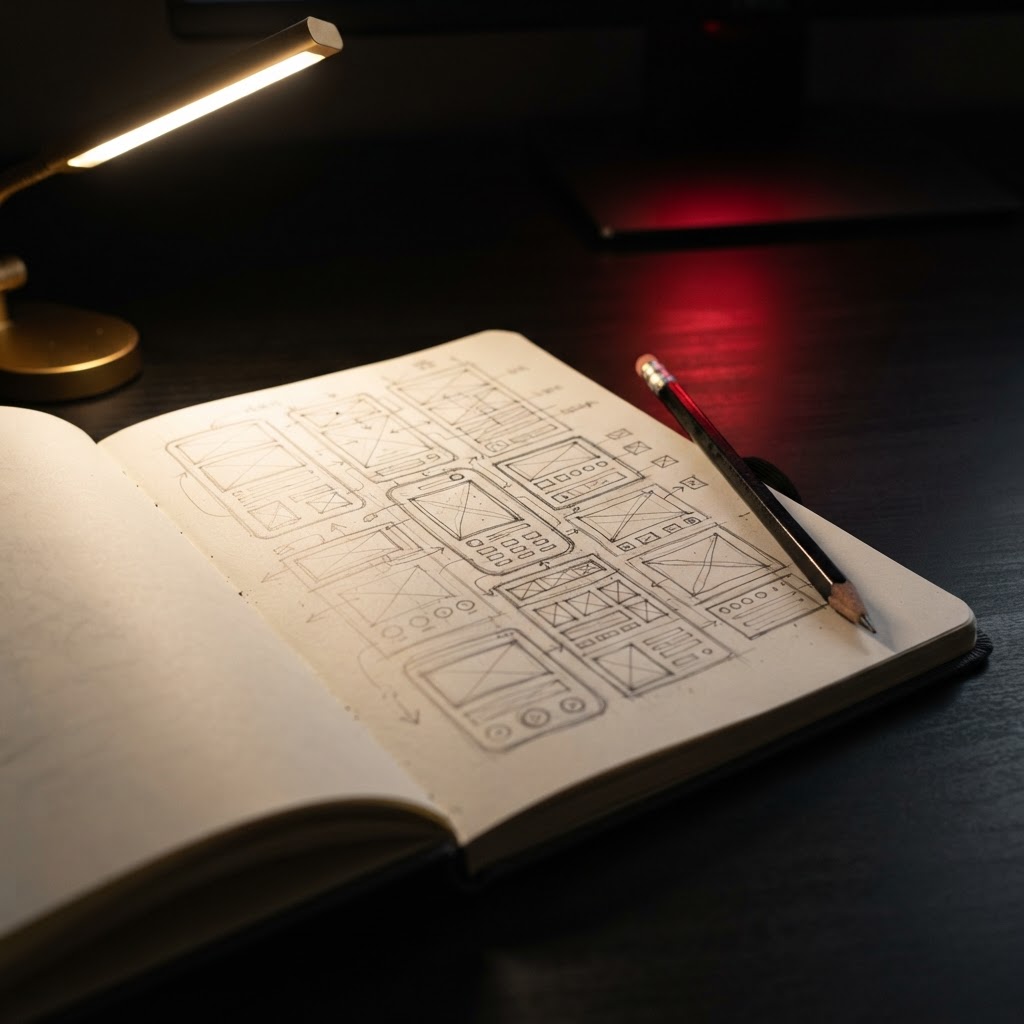
Expect discovery sessions, user journey mapping for MVP decisions, information architecture, wireframes, and clickable prototypes. These artifacts expose missing states, unclear labels, permissions, and handoffs before visual design makes a weak flow look finished.
Problem framing: Define the user, trigger, and desired outcome.
Journey mapping: Identify steps, friction, and abandoned paths.
Wireframes: Test hierarchy before visual styling.
Prototype: Validate critical tasks with realistic interactions.
Accessibility belongs in the definition of done
Accessible interfaces need keyboard paths, readable contrast, meaningful labels, and feedback that does not rely only on color. Canada reports that 8 million people, or 27% of the population, have one or more disabilities, an increase of 1.7 million people since 2017, when the disability rate was 22%. The same source reports that 45% of Canadians with disabilities have encountered digital technology barriers with a federal organization or business, making digital accessibility barriers a product-reach issue as well as a design requirement.
Design improves MVP validation when it clarifies the smallest experience that can test a meaningful behavior. A conversion-focused UI design approach makes one primary action obvious, explains the benefit at the point of decision, and captures the feedback needed to decide what to change next. It does not add features simply to make a demo feel complete.
Design for evidence, not presentation
Each key flow should answer a product question: Can a buyer understand the offer, can a user finish onboarding, or can an administrator find the next task? Instrumentation planning should sit beside the prototype, so the team knows which completed actions, exits, and support requests will change the roadmap.
Mobile app UI design needs the same discipline, with attention to touch targets, interrupted sessions, loading states, and compact information hierarchy. Teams planning a mobile release can apply these principles through mobile app UX design instead of shrinking a desktop dashboard onto a smaller screen.
Use accessibility standards as design inputs
A partner should include accessibility requirements in components, annotations, and testing plans, rather than deferring them to final quality checks. The Government of Canada toolkit describes ICT accessibility requirements as considerations for procurements and non-competitive contracts, as well as project teams, which is a useful model for assigning responsibility early.
The right delivery model depends on the scope of the product, the pace of decisions, and the internal capacity to direct the work. An in-house designer can build deep domain knowledge over time, while a freelancer can cover a sharply defined need. A multidisciplinary agency is most useful when research, interface design, prototype testing, and engineering alignment must move together.
Compare operating models by coordination risk
Model | Working pattern | Management demand |
|---|---|---|
Dedicated agency | Coordinated design disciplines and defined deliverables | Shared planning and review cadence |
Freelancer | Individual specialist contribution | Founder coordinates adjacent roles |
In-house hire | Embedded product ownership | Recruiting, onboarding, and leadership capacity |
The practical ui ux design agency vs in-house team decision is usually about coordination, not prestige. Compare how each model handles research access, product decisions, design-system ownership, and developer questions; a handoff that lacks these answers creates rework regardless of who produced the files.
Look for a repeatable collaboration model
The Ninja Studio works with startups across design and development, which can help teams keep MVP decisions connected to implementation constraints. When comparing a UX agency versus freelancer, ask who owns the complete flow, who resolves edge cases, and how feedback becomes a build-ready revision.
Select a UX/UI design agency by examining how it makes decisions under uncertainty. A useful portfolio shows the product problem, the audience, the interaction model, and the result, not just high-fidelity screens. Ask for examples that resemble your buying motion, such as B2B SaaS UX design, a marketplace workflow, or a mobile onboarding sequence.
Questions that reveal delivery quality
Ask how the team narrows scope, recruits or reaches users, documents assumptions, and handles disagreement between user evidence and stakeholder preference. Request the expected artifacts, review checkpoints, and ownership of source files. The Ninja Studio has worked with more than 23 startups globally and completed more than 30 successful launches, so founders can also assess whether its progress-tracking approach fits their decision rhythm.
Red flags before signing
Be cautious when a provider promises finished screens before defining users, ignores empty and error states, offers no prototype review, or cannot explain how developers receive specifications. Design should also support conversion optimization strategies through clear hierarchy and focused actions, not through unsupported promises about performance.
Accessibility is another test of rigor. A team that references WCAG 2.1 AA should show how those requirements affect components, content, and validation rather than presenting them as a late-stage checklist.
The right design partner helps a startup learn faster by making the product's most important decisions visible, testable, and feasible to build. Prioritize a team that can connect business goals to user behavior, document trade-offs, and preserve accessibility from the first workflow through handoff. The result is not merely a more polished interface; it is a more reliable basis for product investment.
Ready to make your MVP decisions build-ready? Connect with The Ninja Studio to discuss a startup-focused design and development process.
Frequently Asked Questions (FAQs)
Why does a startup need a dedicated UX design partner?
A startup needs a dedicated UX design partner when founders require research, interaction design, and implementation guidance to work as one product process, because disconnected decisions can turn a narrow MVP into a costly collection of untested screens.
What is the difference between UI and UX for software development?
The difference between UI and UX for software development is that UI defines visible controls, layout, and visual feedback, while UX defines the end-to-end path, user expectations, and task completion conditions those interface elements must support.
Is it better to outsource UI design for an AI project?
Outsourcing UI design for an AI project can be appropriate when the external team can clarify confidence, explain data use, design review paths, and coordinate closely with technical stakeholders, since AI output needs understandable user control rather than decorative presentation.
How do you align UI design with business goals?
UI design aligns with business goals when each critical screen supports a defined behavior such as activation, qualification, retention, or support deflection, and the team agrees in advance on the evidence that will indicate whether that behavior improved.
Can UI UX design increase app conversion rates?
UI UX design can increase app conversion rates when it removes unnecessary steps, makes the next action understandable, and addresses uncertainty at decision points, although the outcome also depends on audience fit, offer quality, traffic intent, and product reliability.
About the Author
Olivia Bennett is a Startup Technology Research Specialist who researches software innovation, startup technology trends, and modern development practices. Her work focuses on helping early-stage teams evaluate practical product and technology decisions with clear, evidence-based guidance.

.svg)



.svg)
